Friday, September 10, 2010

Natural highlights II

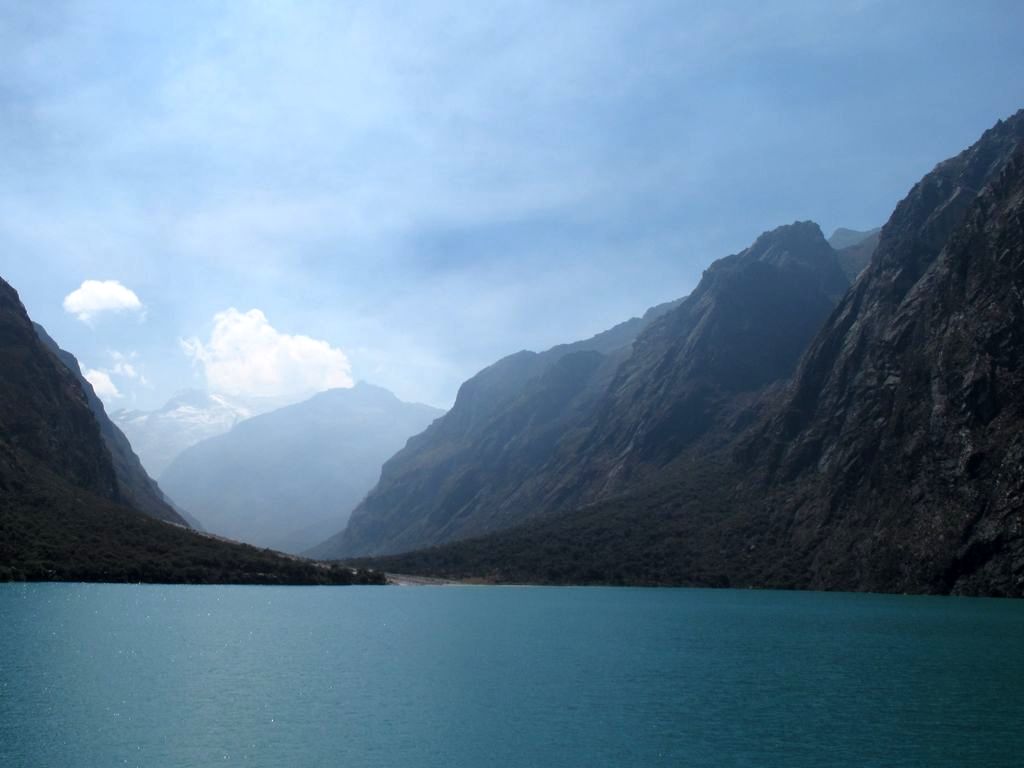
The second edition of "Natural highlights" covers the second third of the expedition - going through Ecuador to Peru.

Goal of the sequel "Natural highlights" is to show you some of the beautiful natural sights the expeditioners managed to photograph.

May the Maya be with you! :)

Colourful sceneries (Ecuador)

Vivid landscapes (Ecuador)

Magnificent crater lakes (Ecuador)

Winding roads (Peru)

Bright glacier lagoons (Peru)

Challenging mountain ranges (Peru)

Chilly sunsets (Peru)

Snow-white peaks (Peru)

Crystal clear ponds (Peru)

Harsh sea shores (Peru)

Fairy-tale lagoons (Peru)

Vast deserts (Peru)

Misty outlooks (Peru)

Wild swamps (Peru)

Deep canynons (Peru)

Tranquil panoramas (Peru)

Saturday, September 4, 2010

Chile (August 31st - September 2nd)

Arica proved Chile's reputation as one of the most expensive countries in South America. Western impression was further underlined by modern clothing (and perfume usage) of local people as well as paved and quite clean streets full of global chains. However, the overall architectural style was a non-definable mix of totally different buildings.

Don Madonarra trying to call home

Don Madonarra again, this time enjoying local McFlurry to overcome sadness after unsuccesful call

Having a free evening, the expeditionists took advantage of discounts due to National Cinema Day and went for a Chilean movie called "Myths & Legends", which was about card game players who accidently entered the world of their heroes. Similar to the local architecture, the plot was a blend of odd infantile gags as well as serious should-be-crying moments so the spectator was left unsure whether the movie is intended to be taken seriously or as a comedy. Still it was worth watching at least for hearing Chilean Spanish and for seeing quite good quality of camera and special effects that was uncomparable to other local South American movies.

Miguel Hudeiro and El Fredovito choosing a movie

To save some time, the adventurers took an overnight bus further south. After several pointless security checks in the middle of the night they finally stepped on the dusty streets of San Pedro de Atacama. This picturesque but quite touristic town provided a good opportunity for regeneration. As the prices in restaurants were unsuprisingly high, the adventurers decided to cook by themselves. Under the supervision of El Fredovito, as usual tasty and unnamable dishes were prepared. Yummy!

Pointless security check at 4 am - all luggage from the bus had to go out

Dusty streets of San Pedro de Atacama

The adventurers trying out local accessories

El Fredovito magically summoning delicious meal

Dinner table prepared by Don Madonarra
(from the left: salad, fried sausages, avocado sauce, pasta and mangos)

The expeditionists decided to spend one day exploring surrounding Atacama desert and its lagoons on rented bikes. At first, the sun illuminated large plains and mountains on the horizon, but it didn't take too long and almost romantic trip suddenly turned into exhausting fitness excercise in the middle of a desert storm. The sand blinded their eyes and made the ride almost impossible. For a while they fought it hoping to reach their afternoon destination (Laguna Cejar), but the nature won. They had to turn back and pedal against the strong wind, which felt like being on a fitness bike ("rotoped") with high gear switched on. The 20 kilometers back to the town took them almost 4 hours. Tired but satisfied for having a new adventurous experience, they again enjoyed a delicious self-cooked dinner and went to bed to be ready for the next day, when one of the biggest highlights of the whole trip would begin - trip to Salar de Uyuni.

May the Maya be with you! :)

El Fredovito and Don Madonarra on their bikes

Miguel Hudeiro on a bike one hour later

Thursday, September 2, 2010

Peru III (August 26st - August 30th)

The second day in Cuzco was dedicated to more remote sightseeing, particularly at the remains of original Inca structures around the city, e.g. the Saqsaywaman (pronounced as "sexy woman"). Even more interesting part of the day came at the lunch time, when the expeditioners decided to taste two of main local specialities - guinea-pig and llama. Although the roasted guinea-pig looked quite big on the plate, it provided rather poor culinary experience. Llama with tea-leaves sauce was, on the other hand, truly delicious. Then it was high time to take an afternoon bus to Ollantayambo and a connecting pricey train (40 USD/2 hours) further to Aguas Callientes.

Cuzco from above

Llamas are by far the most popular animals (not only) in Peru

Roasted guinea-pig with potatoes (front)
and llama meat with tea-leaves sauce and chips (rear)

Aguas Callientes is the base town for exploring Machu Picchu, and arguably the most touristy place visited on the expedition. Being busy with logistical arrangements for the following day, and paralyzed/amuzed by ridiculously high prices all around, the adventurers did not join ubiquitous party-hardy travellers, and rather got some decent sleep.

Pricy monopoly trains shuttling tourists to/from Aguas Callientes

Getting up at 3:45 a.m. was eventually not early enough to get into the first bus leaving for Machu Picchu (at 5:30 a.m.) - yes, there really is lots of tourists coming to see the Lost city of the Incas every day. Despite that, the expeditioners managed to enter the still fog-covered site before the masses, and enjoyed the compelling atmosphere of Machu Picchu to its fullest.

On the spot! Obligatory postcard snap at Machu Picchu

At the very top of Huayna Picchu
(the high hill in the back of the previous picture)

Animal life within the walls of the Lost city of the Incas

Going back to Cuzco through the Sacred Valley (consisting of various Inca citadels close to Machu Picchu) allowed the adventurers to take it easy and spend one entire day visiting Ollantaytambo, Urubamba and Pisac, and hike in their neighborhoods.

Tiny settlement close to Ollantaytambo in Sacred Valley

Political parties promote themselves with slightly infantile symbols on every house wall
(literally... check the previous picture, too)

Phantom of the Sacred Valley

Laundry being done in a progressive manner

A night bus to Arequipa (to be visited again in 3 weeks, on the way from Bolivia) was promptly followed by a bus ride to the mountain village of Chivay (almost 4.800 m), and further to Cabanaconde. The crew challenged themselves while descending into Cañon del Colca (the deepest canyon in the world, 3.191 m) and subsequently climbing it all the way back up. The whole trip took over 9 exhausting hours, but was definitely worth it (not only because of the 3L Coke reward waiting them back in the hostel).

El Fredovito at the bottom of the world's deepest canyon

The expeditioners resting and protecting themselves from strong sunshine

Halfway to the top

Having spent almost 3 weeks in Peru, it was time to move on - to Chile, through Tacna/Arica border crossing.

May the Maya be with you! :)

Tuesday, August 31, 2010

Peru II (August 21st - August 25th)

Arriving to chilly Lima at 5 a.m., followed by coming across series of overpriced taxis and hostels, was not the best possible start of the day. Luckily, the fog and cold was soon gone, together with the first successes of the long-awaited "organizational day" - travellers' cheques were exchanged into Nuevo soles as well as American dollars (to be needed in Bolivia and mainly in Venezuela later on), the time-sensitive train and accommodation around Machu Picchu was booked and - most of all - the flight tickets back to Caracas, Venezuela were purchased for September 20th.

Lima, 5 a.m., in the bus to Miraflores district

El Fredovito in charge of city traffic

German tourist, whom the expeditioners helped out from trouble

Upcoming 4 days were spent in towns and villages situated along the west Peruvian coastline. The first stop was in Paracas (after skipping Chilca, famous for its mud baths, due to inconvenient bus connections). Paracas, small village surrounded by coastal dessert, is heavilly visited because of two main natural attractions - Islas Ballestas (aka "Poor-men Gallapagos", amazing island rock formations populated by hundreds of thousands (!) of birds of various species, and some water-based mammals, too, e.g. penguins, pelicans, sea lions and dolphins) and Reserva Nacional de Paracas (vast desert area with exceptional landscape phenomenas) - both providing the expeditioners with remarkable natural views.

Approaching Islas Ballestas, attractive tourist destination

Impressive, neverending chains of birds on the skies, trying to squeeze on already fully occupied islands

Sea lions, penguins and other mammals were easy to spot

Miguel Hudeiro thoroughly exploring beaches around Paracas

Tasty lunch in fishermen's village - ceviche (local equivalent of sushi) as a starter and roasted fresh fish

Proceeding further south, Huacachina village is the center of sand-surfing and sand dunes buggy tours. The adventurers did not spent much time and money on these group attractions and rather took benefit of very pleasant sunny weather and climbed up the highest sand dune in the area to enjoy unusual outlook on close-by town Ica - where the crew broadened their knowledge of Peruvian history in the regional museum.

Just climbed up - after almost an hour struggle with hot sand

Huacachina in the front, Ica in the back, sand dunes all around

Miguel Hudeiro and Don Madonarra chasing each other

Nazca is a world-famous center of influential Pre-Columbian (ca. before 1492) Nazca culture. Flights over the Nazca lines spread across 500 km2 of desert plains around the city are the main target for all tourists hitting Peru. However, after receiving rather reserved impressions of other fellow travellers, the expeditioners decided to make it a light version. One afternoon was eventually enough to observe at least three figures (lizard, tree and frog) visible from the outlook point outside town.

One of many Nazca lines figures (a tree)

Having still some spare time before boarding a night bus to Cuzco, the crew took a cab to admire nearby Cerro Blanco, the highest known sand dune in the world (height of 2.078 m).

Approaching Cerro Blanco, the world's highest sand dune

17-hour bus ride to Cuzco with reportedly one of the most reputable coach operators in Peru turned out to be truly dismal experience - outrageously overpriced, considerably delayed and poorly customer oriented Cruz del Sur is a company not to be recommended further on. The city of Cuzco made it up for them, though - once being the center of the Inca empire, Cuzco is nowadays rightly considered an archeological capital of the entire continent. Late afternoon and night sightseeing allowed the travelers to explore the most beautiful parts of the city, and get a decent sleep before setting off to Machu Picchu.

Plaza de Armas in Cuzco
(the main square in every Peruvian city holds this name)

Local women in traditional dresses posing with baby sheep

May the Maya be with you! :)